
 LinkedIn
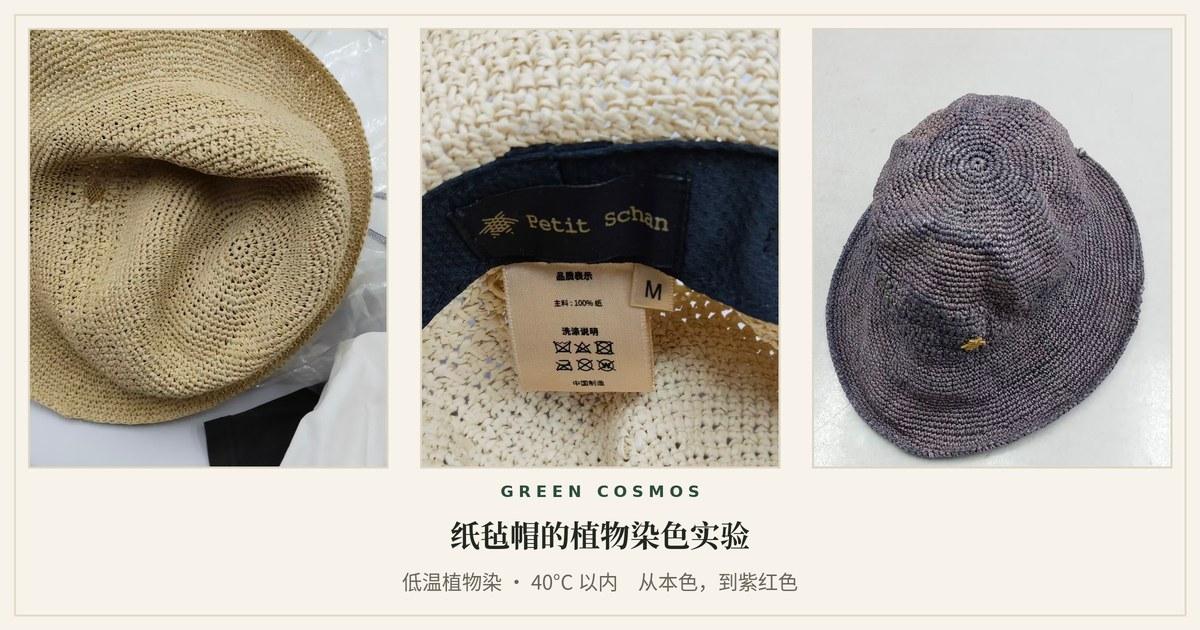
This hat comes from Petit Shan.
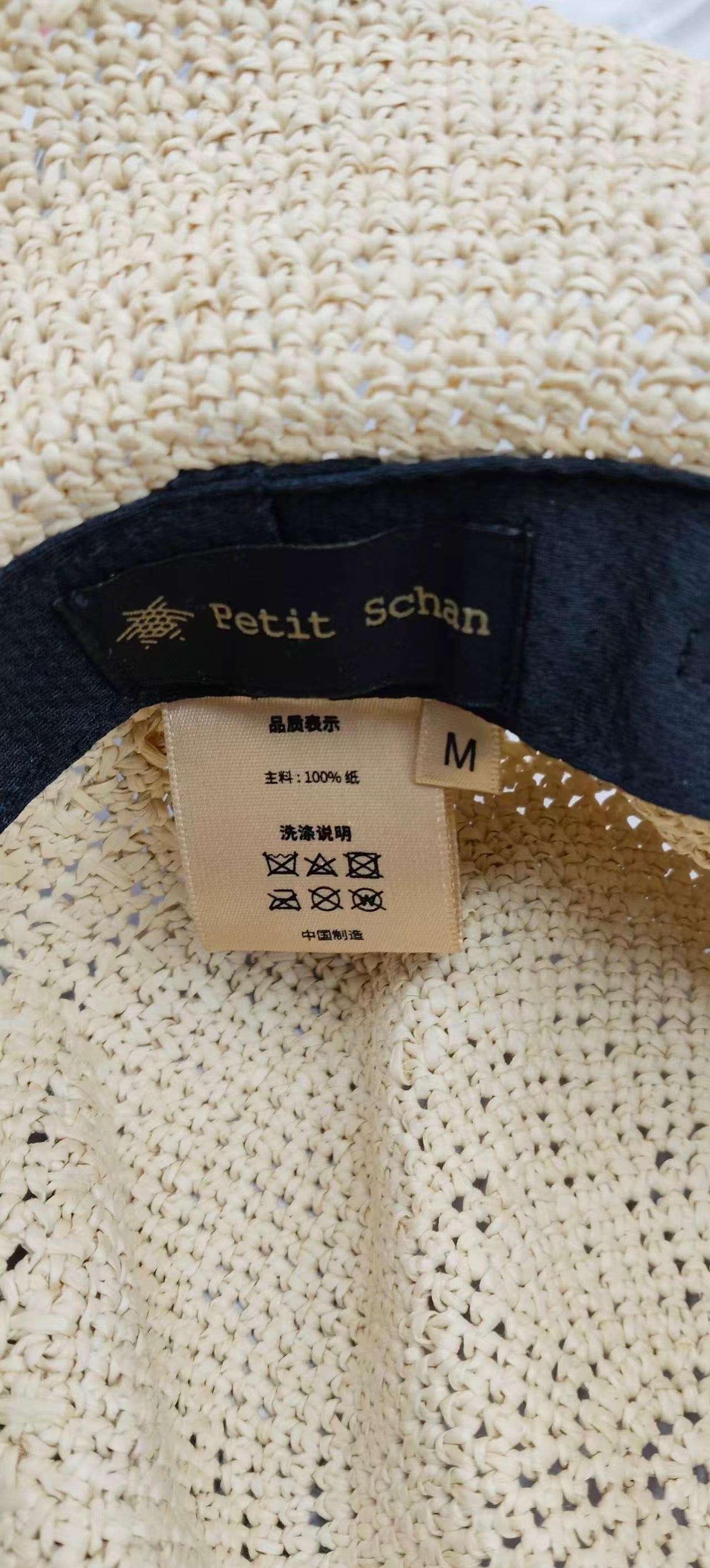
It is a woven paper felt hat. Its main material is 100% paper, with a natural paper feel and a clearly visible woven texture. The client came to Green Cosmos with a direct question: can a natural paper felt hat like this be plant-dyed?
The paper sets the dyeing conditions
Whether a paper felt hat can be dyed depends less on the dye than on the paper itself.
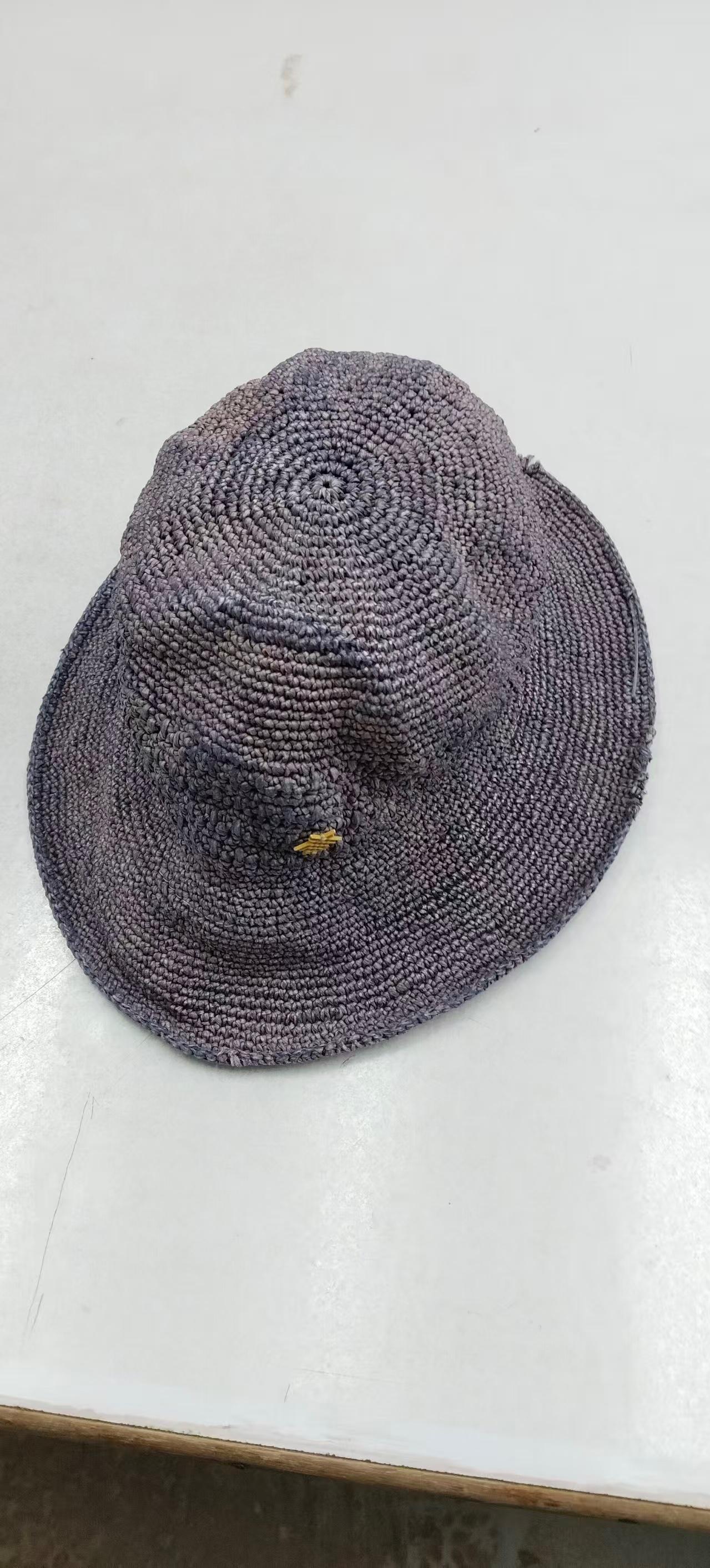
Paper does not take high temperatures, so conventional high-temperature dyeing is out. Instead of forcing a standard process onto it, Green Cosmos chose a low-temperature plant dye for the paper, purple-red, dyed below 40°C, and made a sample for the client.
The result is in the photograph below. The purple-red sits evenly across the woven texture, and the hat keeps its feel and its shape. A hat made of paper, coloured with plants.
First: the range of materials plant dyeing can colour keeps widening
This hat shows one thing: plant dyeing can colour more materials than most people expect.
Beyond cotton, linen, silk and wool, a natural material like paper felt can take colour too. Green Cosmos keeps optimising and widening the range of materials its plant dyeing can colour. Every new material that takes colour extends where plant dyeing can go.
Second: different materials deserve different dyeing solutions
The other point of this experiment is that the solution follows the material.
The dyeing solution for this paper felt hat was customised by Green Cosmos for the properties of paper. Low temperature and gentle handling, because that is what paper can take. Change the material, and the solution has to change with it. No single plant-dyeing process fits every material. Each material deserves a solution of its own.
Third: sustainability runs through the whole process
For Green Cosmos plant dyeing, sustainability is not only about where the dye comes from.
The dye comes from plants. That is one side of it. The energy used by the dyeing process is the other. This time Green Cosmos used low-temperature dyeing, below 40°C, and the process used very little energy. So plant dyeing is sustainable through the whole process, from dye source to dyeing process.
For brands holding an unusual natural material and wondering whether it can be plant-dyed, bring it to Green Cosmos. Building a solution around the material's properties, and making a sample, is what Green Cosmos does.
Turn this route into a project
Garment dyeing starts at 100 pieces of one style in one color, with sampling in about 5 calendar days from material arrival. Tell us the fiber, target color, and quantity, and we can discuss the next step.