
 LinkedIn
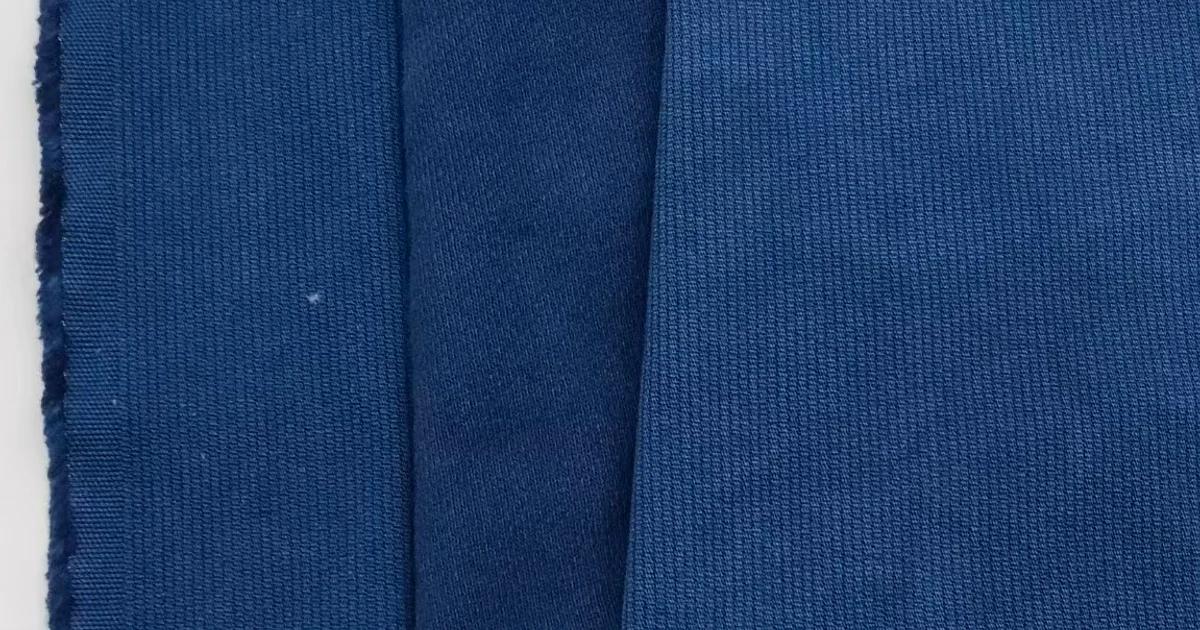
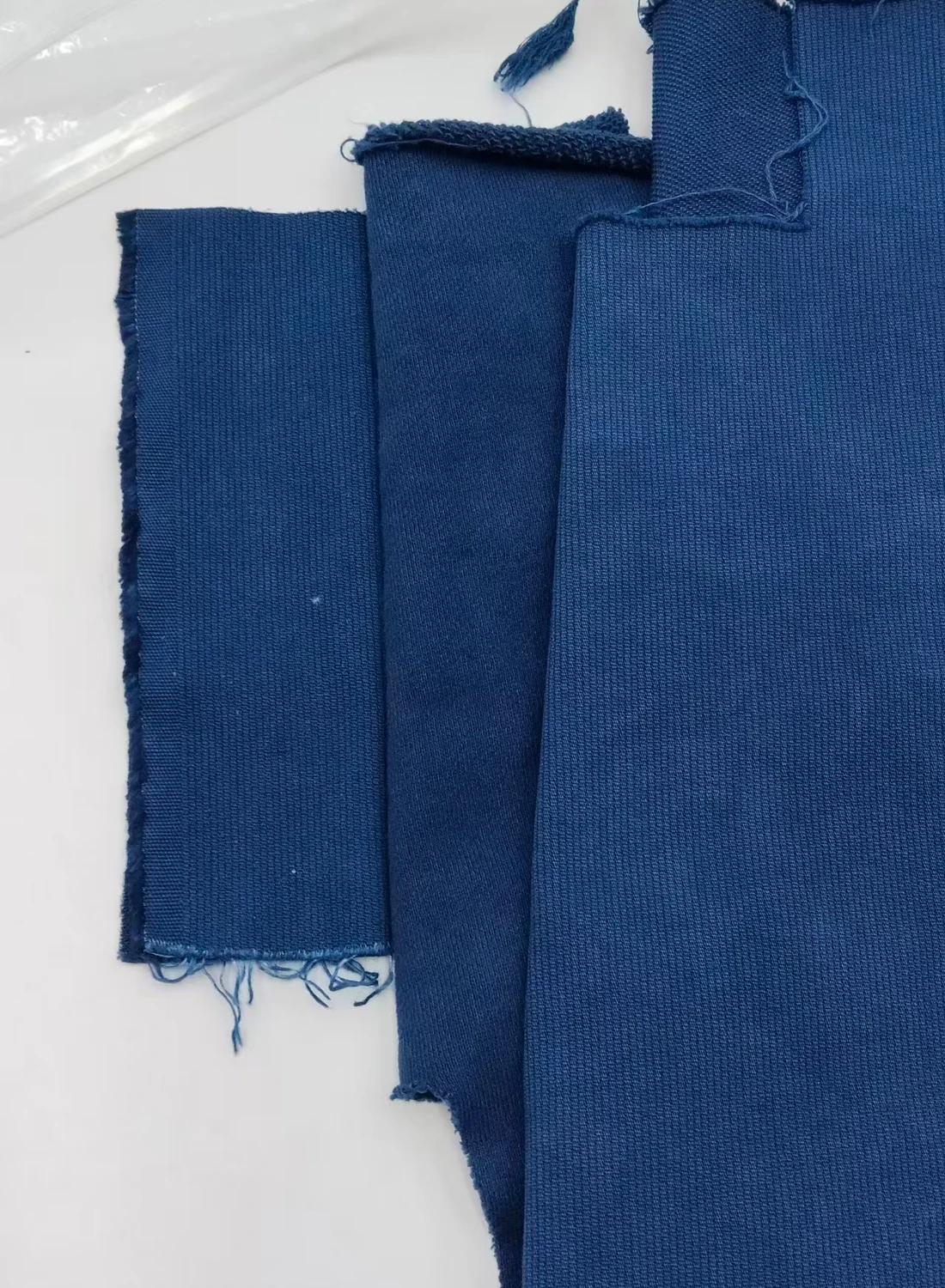
A Japanese client sent us several reactive-dyed swatches and asked whether natural indigo could reach the deepest blue in the set. The target is the swatch at the lower right of Figure 1. The client supplied a shade reference; our task was to see how deep we could take the fabric using natural indigo.
The first sample was still too light
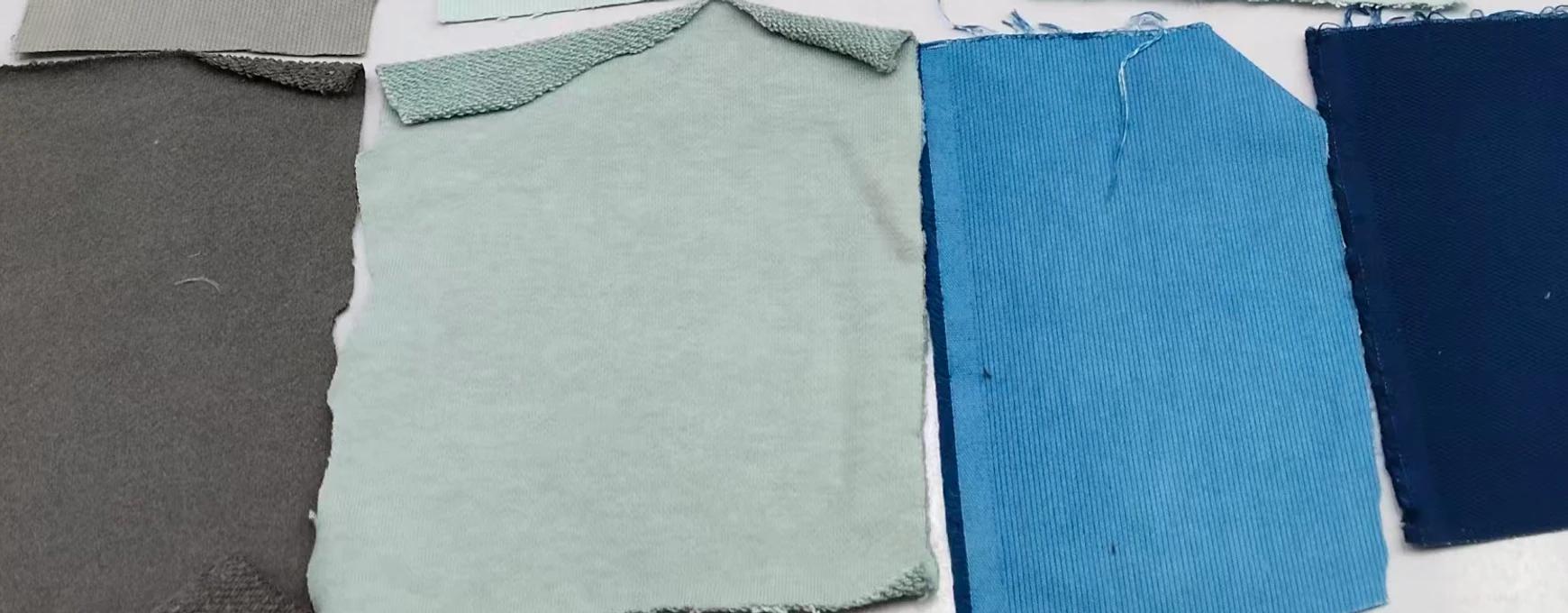
We initially declined. From experience, we knew how difficult it would be to reach that depth with natural indigo, and even if we did, we could not promise colorfastness. The client was still willing to try, so we made a first sample using our usual natural indigo process. Set next to the client's dark swatch, it was visibly lighter.
Two more passes by hand
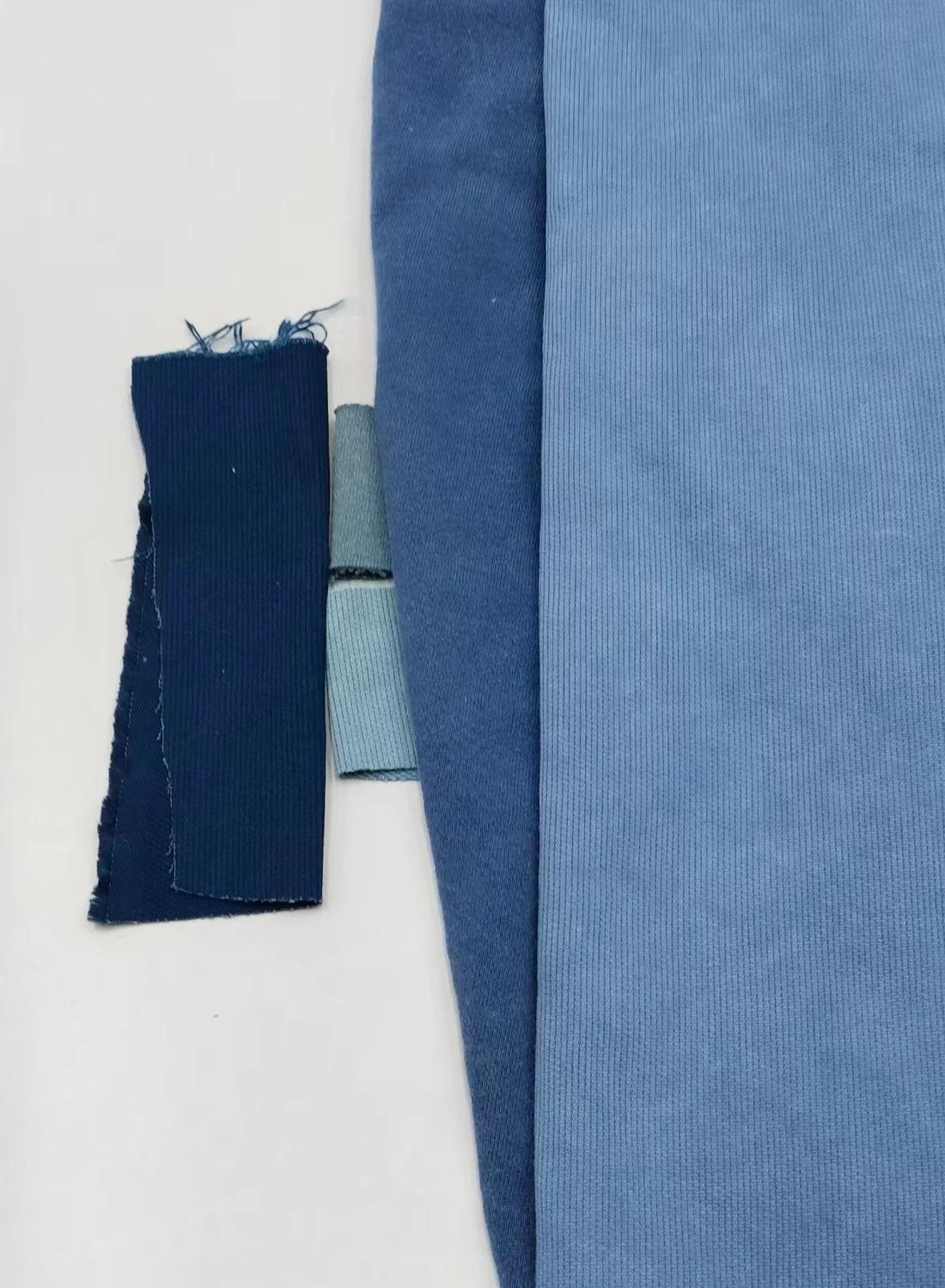
I asked our engineer whether we could handle the fabric by hand and deepen the shade further. At sample scale, hand dyeing let us use a more concentrated dye bath while keeping closer control of the process. After two passes, we set the sample beside the client's swatch again. By eye, the depth was close to the target.
What we observed after washing and sun exposure
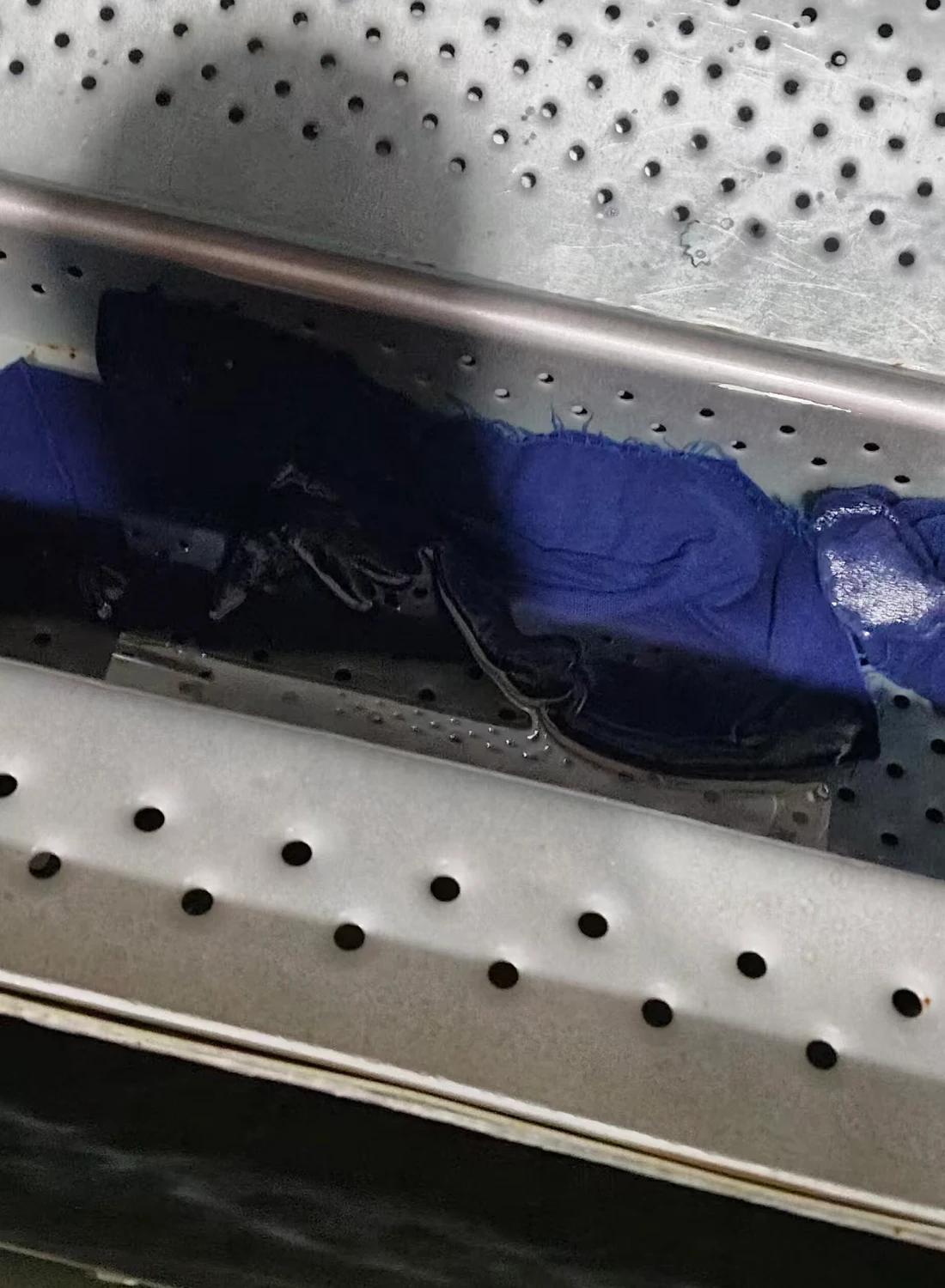
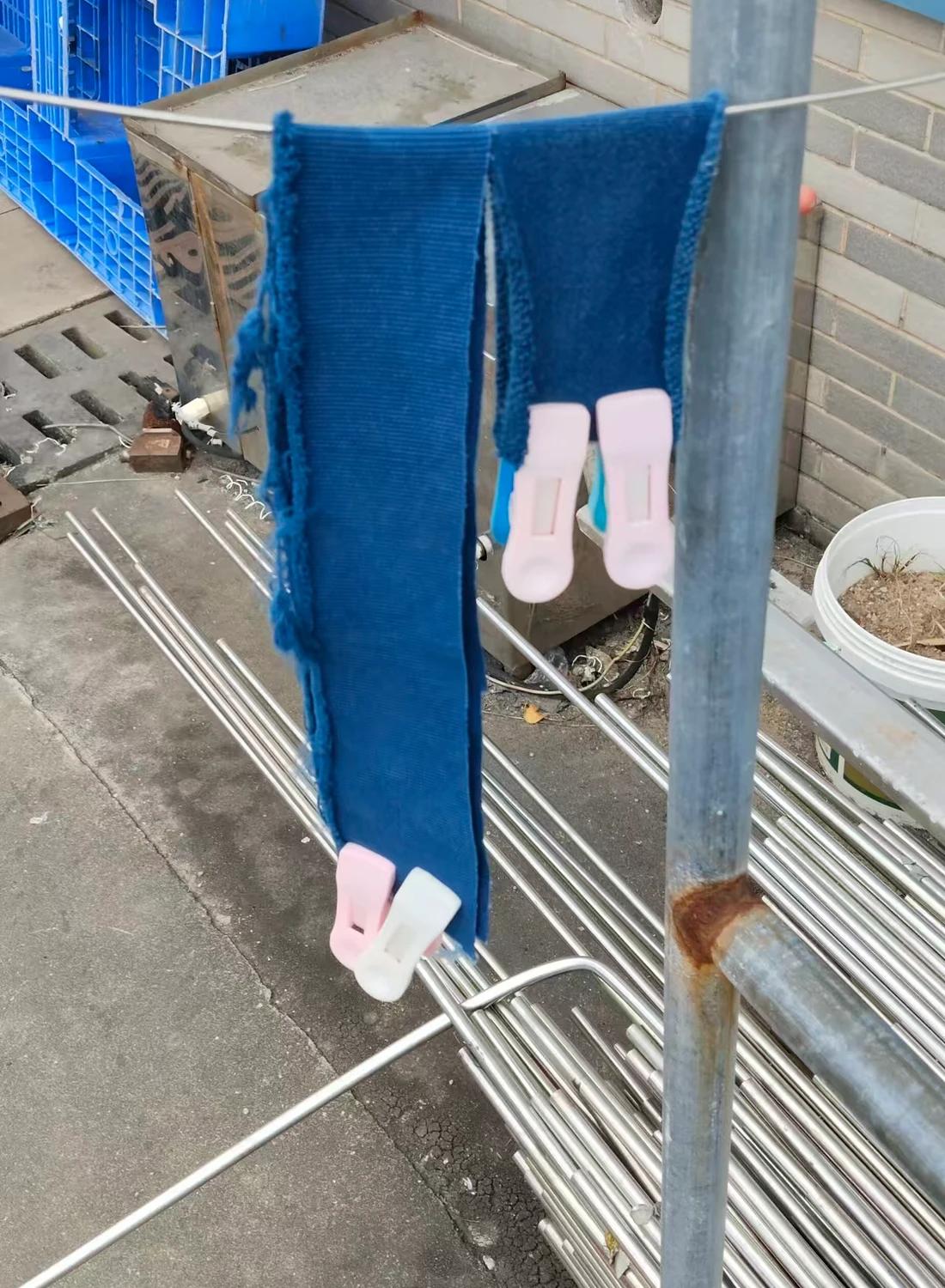
An initial in-house wash check showed no obvious issues. We then cut a small swatch and left it outdoors in sunlight for about 10 hours. We did not see noticeable fading in that observation.
Next step: further development
These in-house checks did not establish a standardized colorfastness grade or demonstrate long-term wear or bulk production performance. The sample gives us a basis for continuing development of this deep natural indigo shade for the client.
Turn this route into a project
Garment dyeing starts at 100 pieces of one style in one color, with sampling in about 5 calendar days from material arrival. Tell us the fiber, target color, and quantity, and we can discuss the next step.