
Case study
From Guizhou Indigo to Yunnan Coffee Dye
October 19, 2026
Our story · Plant-based garment dyeing · Coffee dye
Case study
October 19, 2026
Our story · Plant-based garment dyeing · Coffee dye
In 2017, I attended a Buyi cultural festival in Ceheng County, Qianxinan, Guizhou. Older and younger people wore traditional indigo-dyed clothing. That was where I began to understand a dyeing practice still present in local celebrations.
I also noticed color transferring during wear. Perspiration and rubbing against skin could leave traces of blue. I wanted to understand how the dyeing process could be improved so these clothes could be worn with greater confidence. That practical question brought me into plant-based dyeing.
As our research progressed, we paid closer attention to dye-bath pH, reduction potential, temperature and after-treatment. These became conditions to study and control more consistently. Our work focused on making the process more repeatable while evaluating the resulting textiles.
This work continues to inform how we approach new materials. Fastness still needs to be assessed for the particular fiber, process and intended use. A natural dye name alone cannot tell a customer how a finished garment will perform.
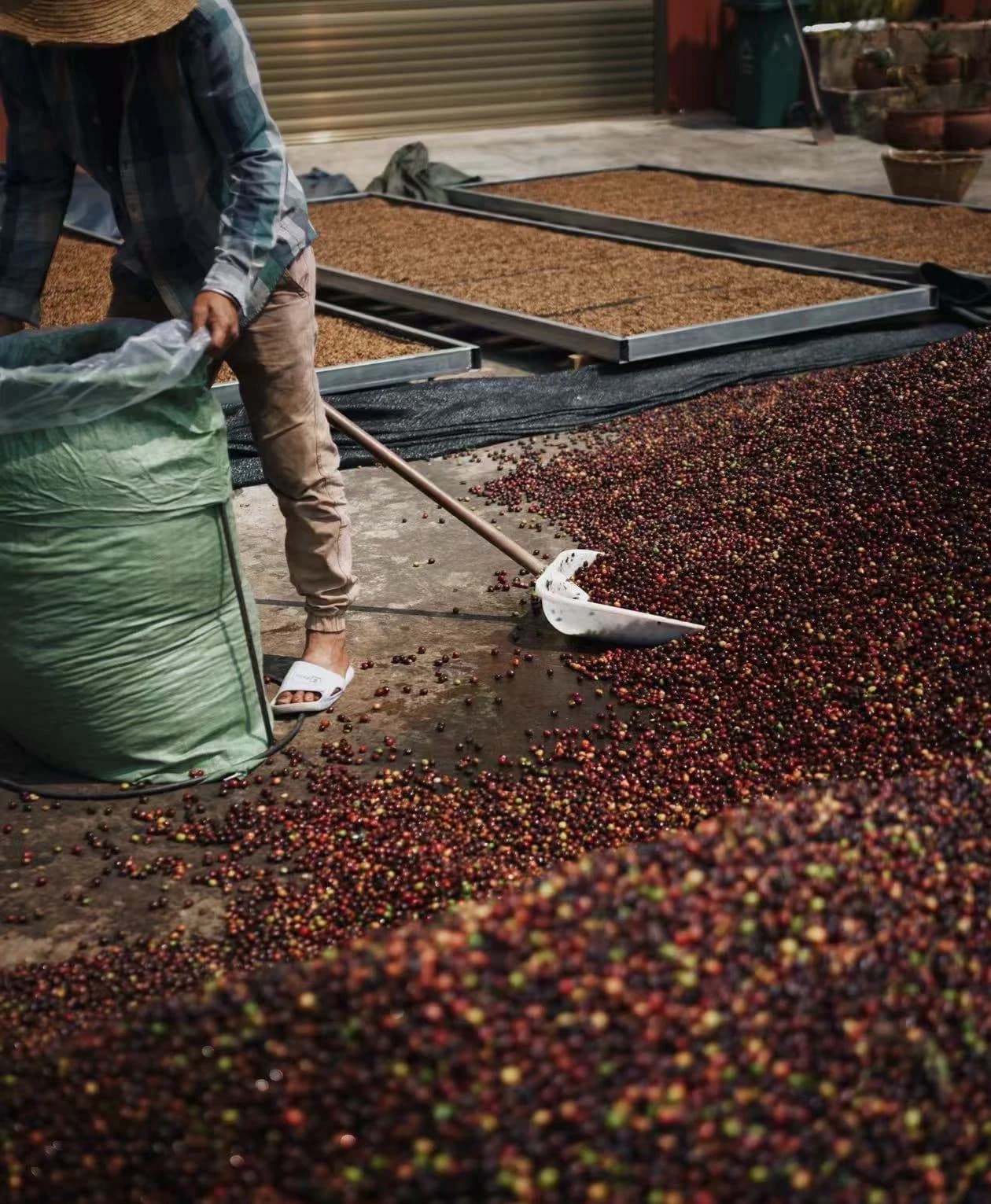
In 2026, we began coffee-dye trials. Yunnan offered access to coffee by-products that we could explore as dye sources. Coffee also felt familiar across borders. I hoped that something people already knew could help start a conversation about plant-based color and its use in clothing.
We developed routes using both spent coffee grounds and coffee fruit skins. In our current sourcing experience, grounds are available for roughly eight to ten months of the year. In our trials, fruit skins have shown a more pronounced color appearance. We use both routes and assess them separately.
Our early coffee-dye work included cotton, wool, silk and yak hide. We were encouraged by the coloring results. The photographs on our website document samples; they do not replace wash, light or rubbing-fastness reports, or establish production-scale consistency.
We also work with specialist textile institutions in China under technical development agreements, exploring dye development and applications on different materials. We are keeping the institutions' names private. For a brand project, the next step is to agree on the material, desired color and evidence required before moving toward production.